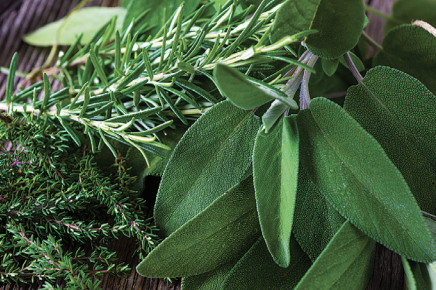
Visit any Farmers Market, grocery store, or other food market and you’re likely to see fresh herbs for sale. Herbs and spices have been used in foods for centuries. Archeologists estimate that by 50,000 B.C. primitive man had discovered that parts of certain aromatic plants help make food taste better. Early settlers brought herbs to the new world to use as remedies for illnesses, as aromatics to store with linens or repel pests, and to mask the bland flavors of food.
Colonists introduced each other to the herb gardening style known as “kitchen gardens,” which involved growing herbs, along with vegetables and flowers, in gardens just outside the kitchen door for convenience and safety. The interest in herbs continued through the Revolutionary War to the presidency of Thomas Jefferson, who grew 26 kinds of herbs in his personal kitchen garden. While our ancestors believed herbs and spices had properties that were beneficial to human health, it wasn’t until more recently that scientists established just how good herbs and spices are for one’s health.
There are two eating patterns that are recommended by USDA in the Dietary Guidelines for Americans – the DASH diet and the Mediterranean diet - both of which focus on herbs and spices as a healthier alternative to seasoning food. In addition to reducing the amount of sugar and salt used to flavor food, herbs provide antioxidants that help protect against some cancers and heart disease.
If you are like most cooks, you probably have quite a few bottles of dried herbs and spices in your kitchen cabinet. I am often asked how long dried herbs and spices last and the answer depends on storage conditions. Most dried spices begin to lose their flavor after about a year and dried herbs can lose flavor even sooner. Light, heat, and moisture further shorten storage life; so if your seasonings are not kept cool, dark, and dry, they may have little potency remaining. A quick “sniff” test can help determine whether to keep or throw. If the herb or spice still smells strong, continue using it.
Cooperative Extension can provide additional information on storing, preserving, and cooking with herbs, as well as growing and harvesting information for those wanting to grow their own. Herbs are very adaptable and thrive well in both small and large spaces making them perfect plants for windowsills, patios, raised beds, or garden plots.
Whether you plant them or purchase them, adding fresh herbs to your life is a great way to “spice” up your table and transform ordinary food into extraordinary meals.